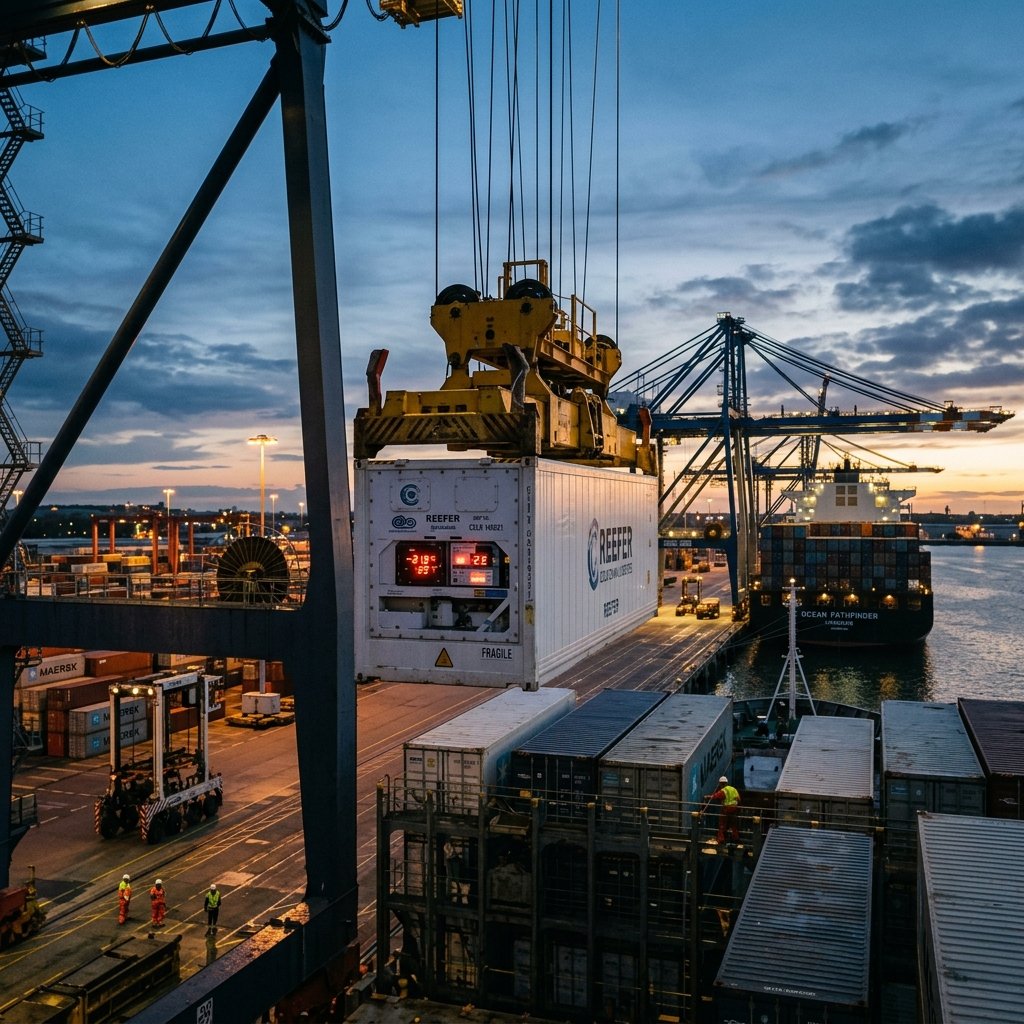
A reefer container looks, from the outside, like any other shipping container. What's different is everything you can't see - the refrigeration unit built into one end, running continuously for the entire journey, holding the cargo inside at a temperature that was decided the moment the product went into the freezer, weeks before it ever reached the port.
What a reefer container actually is
"Reefer" is shorthand for refrigerated container - a standard 20ft or 40ft shipping container with an integrated cooling unit instead of empty steel walls. Unlike dry containers, reefers need a continuous power supply, either from the ship's onboard electrical system while at sea or from a generator (genset) while sitting on a truck chassis or in a port yard. That continuous power requirement is the single biggest operational difference between shipping a reefer and shipping anything else - and it's where most of what can go wrong in cold chain logistics for frozen food actually happens.
Why −18°C is the number that matters
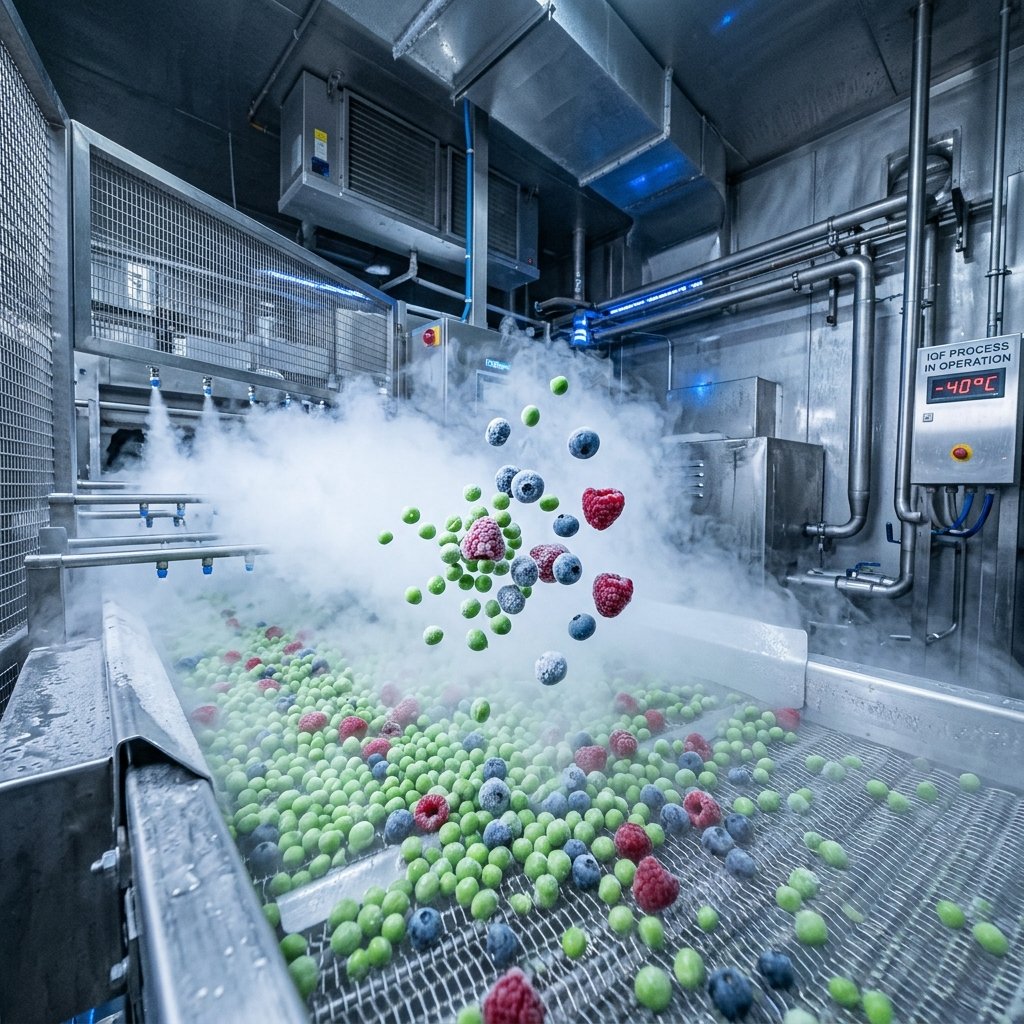
For IQF frozen product, −18°C isn't an arbitrary target - it's the threshold below which ice crystal formation inside the product effectively stops, which is what keeps texture, color and nutritional value stable during a multi-week transit. Every few degrees above that threshold accelerates degradation. A shipment that spends even a portion of its journey at −10°C instead of −18°C won't necessarily look different on arrival but the internal cell structure has already started breaking down - which is exactly the kind of damage that only shows up once a distributor's own customer opens the box.
Where the cold chain actually breaks
Most cold chain failures don't happen mid-ocean - modern reefer units are reliable at sea. The vulnerable points are almost always at the edges of the journey:
The gap between the factory and the port. If a container sits on a truck without power for too long between leaving the cold store and being plugged in at the terminal, that's unmonitored time with no active cooling.
Port yard dwell time. A container waiting to be loaded needs to be plugged into the terminal's reefer points immediately - a container left unplugged, even briefly, starts losing temperature.
Improper stuffing. Cargo needs to be loaded with enough clearance around the container's air chute for cold air to circulate. A container packed too tightly or packed without following the manufacturer's loading pattern, can end up with warm pockets even though the unit itself is working perfectly.
Genset failure on inland transit. On the trucking legs before and after the ocean voyage, the container runs on a generator rather than grid power - this is a more failure-prone link than the ship's own power supply.
What temperature monitoring actually looks like
A reefer container running "at temperature" and a reefer container that's genuinely protecting the cargo aren't always the same thing - which is why monitoring matters as much as the refrigeration unit itself. Two things worth understanding:
Pre-Trip Inspection (PTI): a check run before the container is loaded, confirming the refrigeration unit is functioning correctly before it's trusted with cargo.
Continuous temperature logging: a data logger inside the container records temperature throughout the journey, creating a record that can be checked on arrival - and, increasingly, monitored in near-real-time via GPS-linked tracking, so a temperature excursion can be caught and escalated while the container is still in transit rather than discovered after the fact.
What to ask a supplier before you order
If you're evaluating a frozen food supplier, a few questions cut straight to whether they actually understand cold chain shipping or just say the words:
Is the container temperature-logged for the full journey, not just spot-checked?
Who's responsible for confirming the PTI before loading?
What's the plan if a temperature excursion is flagged mid-transit?
A supplier who answers these specifically, rather than with a general reassurance, is one who's actually done this before.
How we handle it
Every Freskato shipment goes into a reefer container that's been through a pre-trip inspection before loading, with temperature maintained at −18°C and logged for the duration of transit. It's not a guarantee that nothing can ever go wrong in a global supply chain - no honest supplier will tell you that - but it's the difference between a cold chain that's actively managed and one that's just hoped for.
Have a specific shipping route or destination in mind? Get in touch and we'll tell you plainly what we can and can't handle.