The global frozen food market is experiencing unprecedented growth and at the heart of this expansion is a remarkable technological advancement: Individually Quick Frozen (IQF) technology. For importers, distributors and consumers alike, understanding what IQF freezing actually does to the texture, nutrition and overall quality of produce is crucial for making informed purchasing decisions. In this comprehensive guide, we'll take a deep dive into the freezing tunnel to explore why IQF produce maintains its crisp bite, vibrant color and nutritional density long after it has been harvested from the fields.
The Traditional Freezing Dilemma
To fully appreciate the marvel of IQF, we must first understand the limitations of traditional freezing methods. Historically, freezing food involved placing bulk quantities of produce into a cold environment where temperatures would slowly drop over several hours or even days. This slow freezing process allowed large ice crystals to form within the cellular structure of the food.
When you freeze a strawberry slowly, the water inside its cells expands as it turns into ice. Because the freezing is gradual, these ice crystals grow large and jagged, effectively puncturing the delicate cell walls of the fruit. When the strawberry is eventually thawed, the damaged cell walls collapse, causing the fruit to release its internal juices and become a mushy, unappealing mess. This cellular damage is the primary reason why traditional frozen foods often suffer from poor texture and a loss of structural integrity.
Enter IQF: The Science of Speed
Individually Quick Frozen (IQF) technology fundamentally changes the physics of freezing. The core principle of IQF is speed. Instead of freezing produce slowly in bulk, the IQF process rapidly freezes each individual piece of food in a matter of minutes.
Here is how the process works:
Preparation: Fresh produce is washed, blanched (if necessary, such as with peas or broccoli) and carefully sorted.
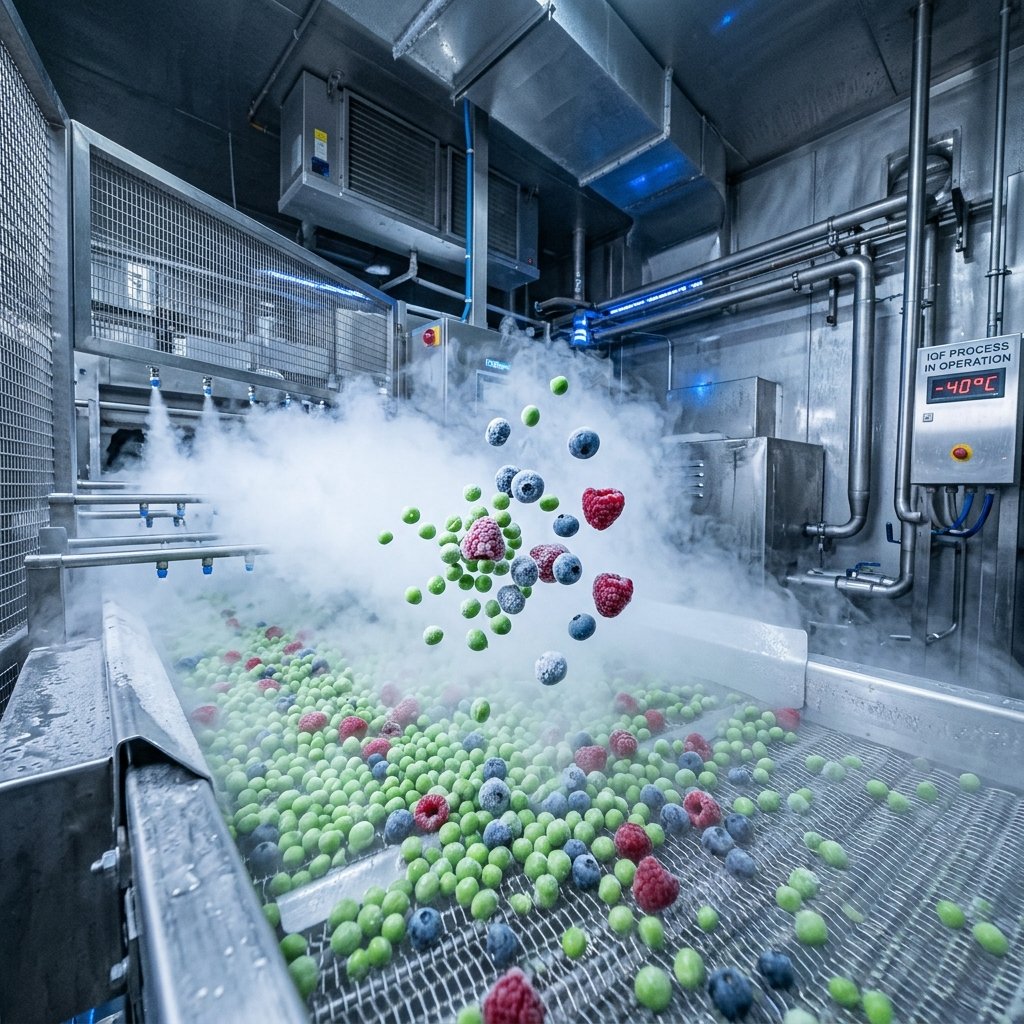
The Fluidized Bed: The individual pieces are fed onto a perforated conveyor belt that moves through a specialized freezing tunnel.
The Deep Freeze: Inside the tunnel, powerful fans blast ultra-cold air (often between -30°C and -40°C) upwards through the conveyor belt.
Suspension: The force of the cold air causes the individual pieces of produce to lift and suspend in the air - a phenomenon known as a "fluidized bed."
Rapid Freezing: Because each piece is suspended in sub-zero air, it freezes almost instantly on all sides without sticking to its neighbors.
This rapid freezing process ensures that the water molecules within the plant cells freeze so quickly that they only form microscopic ice crystals. These tiny crystals are too small to rupture the cell walls. As a result, the cellular structure remains entirely intact.
Preserving Texture and Bite
The immediate benefit of the IQF process is the preservation of texture. Because the cell walls are not destroyed by large ice crystals, IQF produce retains its structural integrity when thawed or cooked.
Take IQF Green Peas, for example. When you bite into an IQF pea, it still has that satisfying "pop" and tender firmness that you expect from a freshly shelled pod. Similarly, IQF sweet corn retains its crispness and IQF berries hold their shape without immediately collapsing into a puddle of juice. For culinary professionals and home cooks, this means that frozen vegetables can finally provide the same mouthfeel and textural experience as their fresh counterparts.
Locking in Nutritional Value
Perhaps the most significant advantage of IQF technology is its impact on nutritional density. There is a common misconception that fresh produce is always more nutritious than frozen. However, this is often not the case due to the realities of the modern supply chain.
When fresh vegetables are harvested, they immediately begin to lose nutrients, particularly sensitive vitamins like Vitamin C and folate. By the time a "fresh" head of broccoli travels from a farm to a distribution center, sits on a supermarket shelf for days and finally ends up in a consumer's refrigerator, it may have lost a substantial portion of its original nutritional value.
In contrast, produce destined for IQF processing is typically harvested at the absolute peak of ripeness -when its nutritional profile is highest - and processed within hours of being picked. The rapid freezing process acts as a pause button, locking in those vitamins, minerals and antioxidants at their peak levels. Numerous independent studies have demonstrated that IQF vegetables often contain higher levels of key nutrients compared to fresh vegetables that have spent several days in transit.
Vibrant Colors and Natural Flavors
Beyond texture and nutrition, the IQF process is instrumental in preserving the sensory appeal of food. Enzymes present in plants naturally cause degradation, leading to browning, off-flavors and loss of color over time.
For many vegetables, the IQF process includes a brief blanching step - a quick plunge into boiling water or steam - just before freezing. This blanching deactivates the enzymes responsible for degradation. The subsequent rapid freeze locks in the vibrant, natural pigments of the produce. This is why IQF green peas remain a brilliant, eye-catching green and why IQF carrots retain their bright orange hue. Furthermore, because the freezing happens so quickly, volatile flavor compounds are trapped within the food, ensuring that the natural taste of the produce is preserved until the moment it reaches the plate.
The Importer's Advantage
For international buyers, importers and food manufacturers, IQF technology offers distinct commercial advantages:
Free-Flowing Convenience: Because each piece is frozen individually while suspended in air, the final product does not clump together into a solid block of ice. This "free-flowing" characteristic allows users to pour out exactly the amount they need and return the rest to the freezer, minimizing food waste.
Extended Shelf Life: IQF products typically boast a shelf life of 18 to 24 months when stored correctly at -18°C, providing immense supply chain flexibility.
Consistent Quality: The rigorous sorting and processing required for IQF ensure a highly consistent, premium product year-round, regardless of seasonal variations.